
The Legacy of Black
Political Power
Until the United States cleaved itself in two and waged a bloody civil war to postpone judgement for its original sin, Black political identity in the United States rarely existed. Though Black revolutionaries, visionaries, outlaws, and inventors riddle Colonial, Early American, and Antebellum history , the prospect of Black individuals holding political influence, let alone political identity, remained elusive. However, the exclusion of Black people in the political and economic process did not prevent the rich social and cultural development in Black communities that nourished the conditions to build political power whenever or wherever the chance presented itself.
Here we discuss the Legecy of Black Political Power and the instrumental moments and movements throughout history upon which our story is told.
Reconstruction Era:
the prelude to Civil Rights
As the Civil War drew to a close, the Antebellum period ended and so began the the introduction of both formerly enslaved and free Black people into the United States social, political, and economic structures. The Reconstruction Era is wrought with violence, perseverance, hope. Despite the failed promises, cowardice, and fear of the institutional powers, Black communities in the late 1800s forged a path bonafide citizenship that we are still on today. The future can never be lost. Our ancestors did far more with much less in the face of greater danger. In the Reconstruction Era we see our political identity begin and draw inspiration to build it up once again.
Emancipation Proclaimation
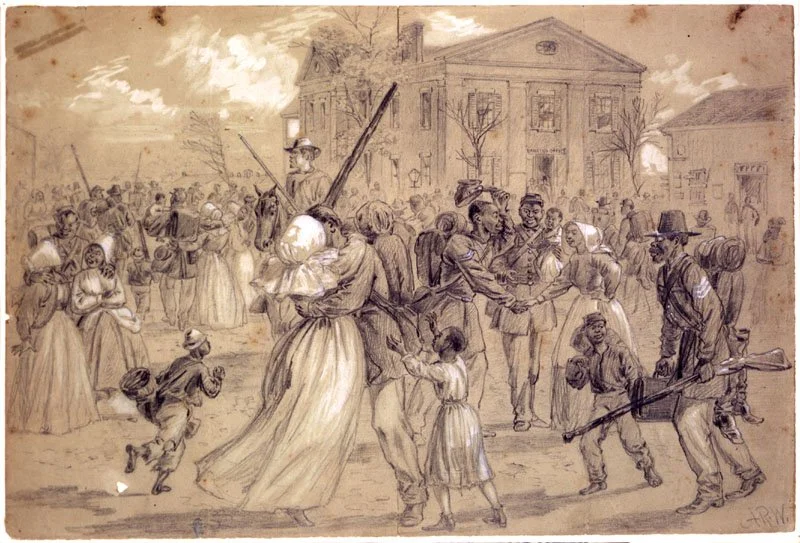
As a key tactic to decimate the Confederate war campaign, Abraham Lincoln issued the Emancipation Proclamation, and executive order, directing the Union to harbor any enslaved Black people that were able to make it into Union controlled territory. The Emancipation did not free all Enslaved peoples. The executive order only applied to States in the Confederacy. Border states like Maryland and Enslavers in Northern states were excluded from the proclamation’s reach. This was a landmark moment to repudiate the diabolical Dred Scott decision and lay the groundwork for Black people to shed their property status and begin the journey to full citizenship.
Today we mark June 19th, Juneteenth, a federal holiday to commemorate the last enslaved Black communities in the Southern United States learning of their freedom during the final moments of the Civil War. However, not until the 13th Amendment’s ratification in December of that same year was slavery as a de-facto legal status abolished.
Reconstruction Amendments
Regardless of how egregious it sounds, there required a process to transition millions of Black people’s legal status from property to citizen, and a practice to ensure former enslavers could not disenfranchise newly empowered Black communities. The United States efforts this time are known as the Reconstruction Amendments. Through a tumultuous, post-war period in Washington, D.C., the government passed the 13th, 14th, and 15th Amendments to grant, unquestionably, political rights and the full protections of the United States government to every formally enslaved individual. Their order is freedom, citizenship, and the right to vote.
The 13th Amendment. It abolishes slavery in the United States except as a punishment for being convicted of a crime (We looking at you mass incarceration).
The 14th Amendment. granted citizenship to the formerly enslaved, but its actual role is much deeper. The 14th Amendment effectively establishes a relationship between the people and their government in effort to define out any attempt to encroach on bodily autonomy again.
Section 1 grants citizenship to the formerly enslaved. Section 2 ties House seat apportionment to number of eligible voters, not inhabitants. Section 2 has never been fully enforced. (We still looking at you mass incarceration). Section 3 disqualifies anyone who has engaged in rebellion or insurrection from holding office in an effort to prevent confederates from seizing power and reinsituttionign slavery. Section 4 lays out the validity of public (government) debt to prevent the Union from assuming Confederate economic responsibility. Lastly, Section 5 grants Congress the full authority to pass legislation to enforce any provisions in the Amendment.
The 15th Amendment. Prevented states from barring voters for their race, color, and previous condition of servitude. It also granted Congress the authority to enforce those provisions. Notably, sex or gender were not included in the reasons to bar voters
Enforcement Acts
-
Description text goes here
-
Description text goes here
-
Description text goes here
As the 14th and 15th Amendment sate, Congress has the power to enforce their probisions and during the Reconstruction Era they did. In an effort to prevent former Confederate that banded togther to form organiations hostile to prgress like the Klu Klux Klan from barring Black people from enjoing their rights, Cogress passed several landmark pieces of legislation that still influence racial justice today.
Legislation from the Reconstruction Area divided the South into several military districts governed by generals appointed by the federal government. With the Civil Rights Acts of 1866, 1871, 1875, and a slew of intermitent legislation, the federal government provided several legal remedies to aggrieved Black communities to stake their claim in society and hold those responsible for depriving Black communities of those rights accountable. Today, civil claims filed against police officers who engage in excessive use of force and brutality are sued under 42 USC 2983, a provision of the Civil Rights Act 1871, that was granted legal authority in the 1960s.
First Black Elected Leaders
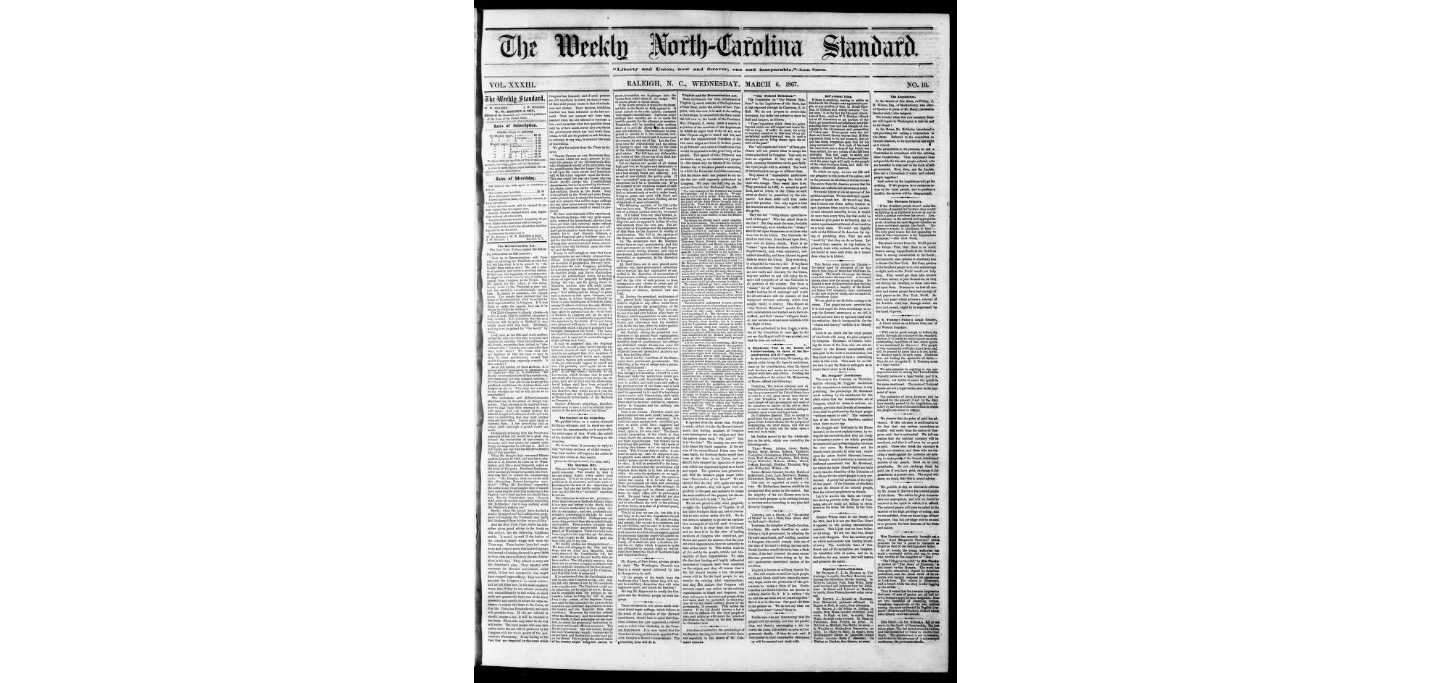
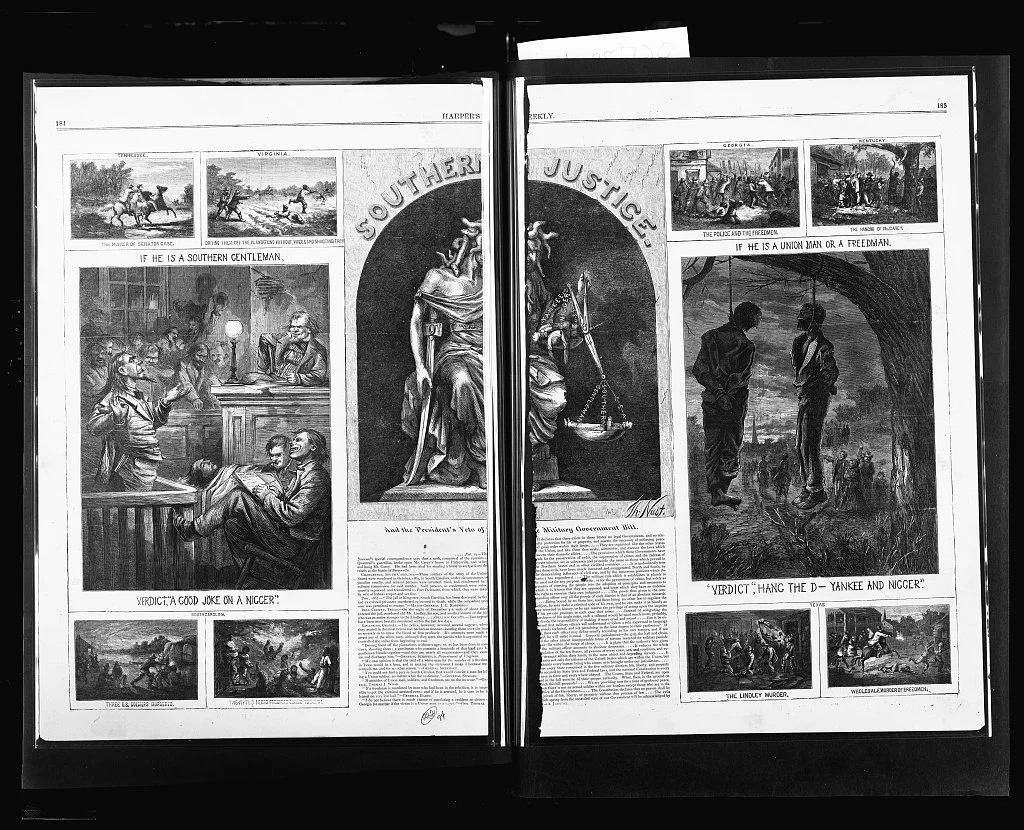
During this period of Enforcement, Black people made the most of their opportunities and their political identities flourished. During the late 1800s we see the first Black elected leaders at local, State, and federal level. It was during this period Mississippi sent the first Black person to the United States Senate because of the influence and power Black communities obtained on the local and state level. From Mississippi to South Carolina to Virginia and across the South, Black political identity and power was emerging for the first time in this countries history.
However, much of the political capital necessary to ensure these advancements for Black communities not only continued, but spread, was wasted on corruption so much so that pro-civil rights leaders began to lose power and former Confederates reestablished control over the SOuthern United States. These events culminated in the Election of 1876 and a corrupt bargain that fully returned the South to Confederate rule.
The Corrupt Bargain: Compromise of 1877
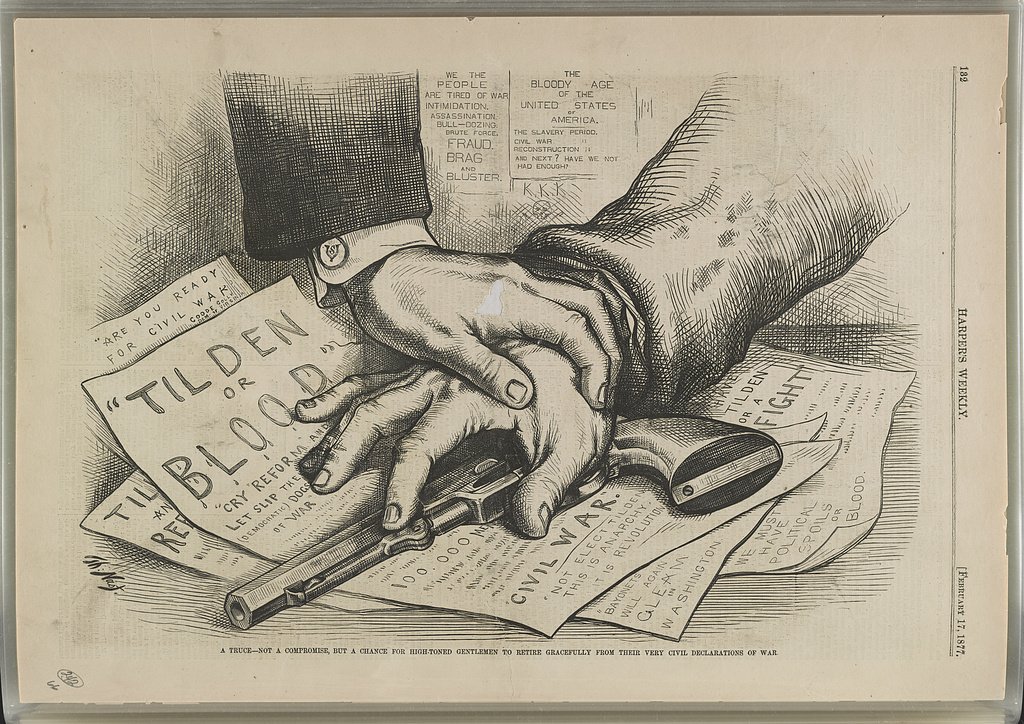
Reconstruction came to an abrupt end when the country flirted with its first Constitutional Crisis. When the Election of 1876 happened, neither candidate secured the electoral votes needed to become Preisdent. Congress went to work establishing commissions, investigating voting irregularities, interviewing witnesses, and trying to determine how to award electoral votes from key Southern states. In the end, an agreement was made by the political parties to end Reconstruction in the South in exchange for the Presidency. This led to the final blow to the Reconstruction agenda and paved the way for the Jim Crow South to return newly enfranchised Black people to a property class.
Jim Crow Era:
Refusing to progress
Plessy v. ferguson
With troops totally withdrawn from the South and political power back in the hands of Southern whites, the landmark court case Plessy v. Ferguson gave former slave holding states the legal cover to abandon the spirit of the Reconstruction Amendments and invest in a caste system to keep Black people separate from popular society. In this case a man with a Black great-great grandfather was sitting in a whites only section of a rail car and forced to move under the colloquial “one drop rule.” Plessy sued for his rights under Reconstruction policy but he was barred from relief at the Supreme Court. At the time the court offered a “separate but equal” interpretation of the Reconstruction Amendments and statutes that permitted legal segregation. This caste system would remain in place for the next 70n years and result in an untold amount of violence and barbarism at the hands of white Southerners.
Institutionalized Voter Suppression
Working to combat the economic, political, and social gains made by Black people and other racialized minorities during Reconstruction, in addition to separate but equal segregation, Southern state also implemented a slate of voter suppression tools to draw distance between Black people and their rights. Chief among those tactics was voter suppression. Grandfather clauses, polls taxes, literacy tests, voter registration, and more were all systems and tools developed and deployed at the end of the 19th century. By blocakding access, governments were able to choose the voters based on aritary rules they knew would disfavor Black voters. Though there were constitutional protections in place, the Jim Crow era prevented those rights from being actualized.
Brown v. Board of EDUCATION
The first major blow to the Jim Crow era was Brown v. Board of Education. When a little girl was forced to walk miles to attend a school for Black children when a Whites only school was in her neighborhood, her family sued that there was no equality to the separation. The case birth the famous quote that to be separate is to be inherently unequal.
Though this case began the end to segregation, many additional Jim Crow-esque measures were put into place to prevent the integration. Public school closures, the rise of private schools, the . In Virginia, this policy stand point was known as Massive Resistance and represented a concerted effort to prevent the Brown decision from being implemented.
Civil Rights Era:
A United Fight For humanity
MONTGOMERY Bus Boycott
With relations in the South reaching a fever pitch, civil rights organizers across the region organized the catalytic event that ushered in the Civil Rights Era. On December 1, 1955 Rosa Parks refused to give up her seat to a white man officially executing the plan to challenge Jim Crow policy through organized activism. What ensued was the largely successful Montgomery Bus Boycott that saw Black people across Montgomery, Alambama refused to use public transportation unless and until they were treated as equal patrons to their white counterparts. The boycott was a resounding victory because the Black population represented a determining share in the public transit market. Without Black dollars the transit system would have gone bankrupt and, in the end, it was economic pain that forced equal treatment.